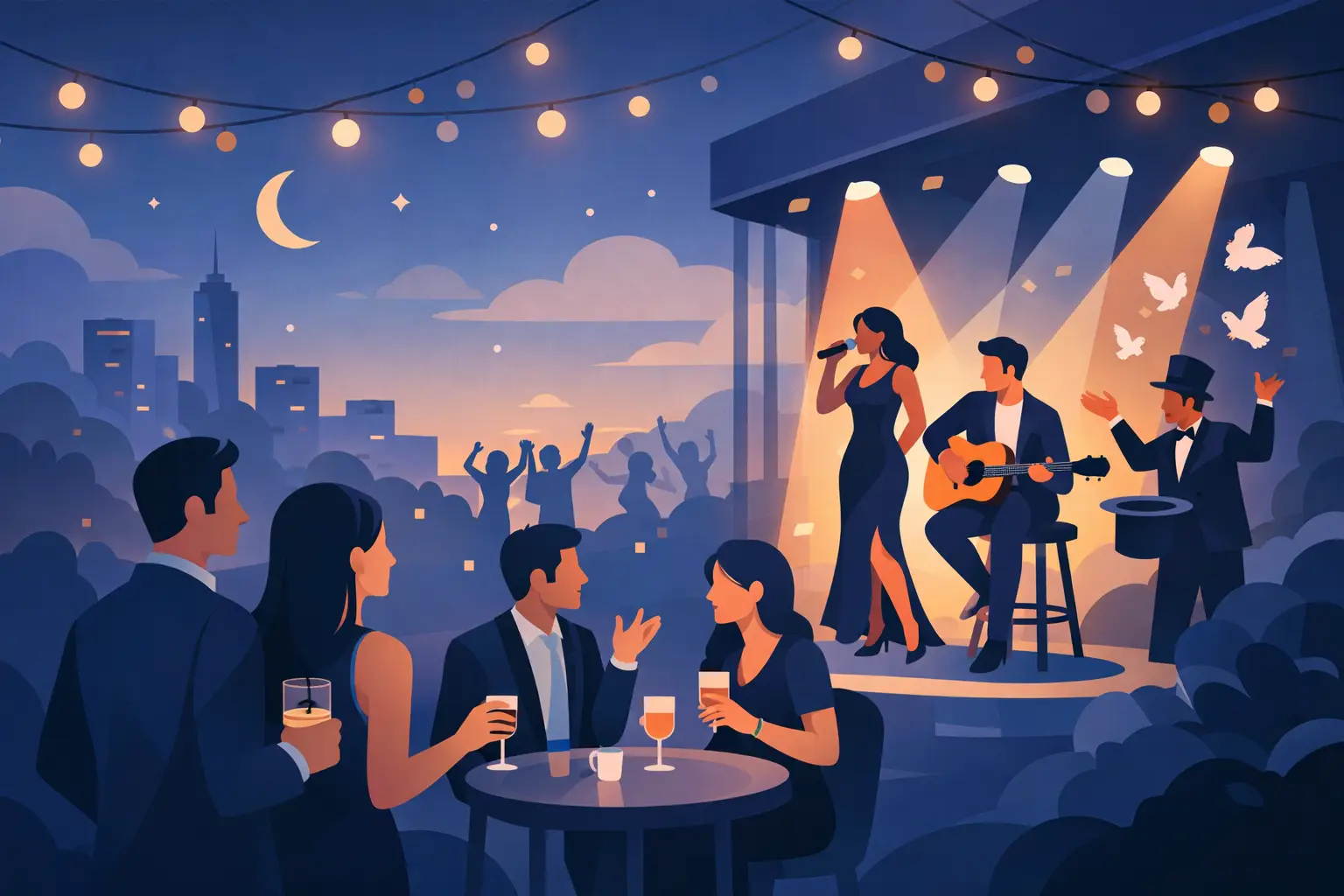
By the time the daytime agenda wraps, most conference audiences are in one of two modes: mentally maxed out or finally ready to engage. That is exactly why conference evening entertainment matters. The right format does not feel like an add-on. It resets the room, keeps momentum alive, and turns a long event day into something people actually remember.
For planners, that distinction matters. Evening programming can either sharpen the overall conference experience or drain it. A forgettable after-hours event creates more fatigue. A well-built one gives attendees a reason to stay, interact, and leave with a stronger impression of the brand, the meeting, and the people in the room.
What conference evening entertainment is really supposed to do
A lot of teams treat evening entertainment as a simple booking decision. Pick music, add food and drinks, open the doors, and hope the atmosphere takes care of itself. In corporate settings, that approach usually leaves too much to chance.
Strong conference evening entertainment has a job to do. It should lift energy without becoming chaotic. It should create participation without putting people on the spot. It should support networking without making the room feel forced or awkward. Most of all, it should match the business purpose of the event.
That last part gets missed all the time. A sales kickoff has a different energy than a leadership summit. A user conference has different expectations than an internal company retreat. Evening entertainment should reflect that reality. If the tone is off, even a polished act can feel disconnected from the event around it.
Why traditional evening formats often fall flat
The most common problem is passive entertainment. People walk into a ballroom, hear background music, look around, and wait for something to happen. If nothing invites them in, smaller groups stay clustered, introverts stay on the perimeter, and the energy never builds.
Another issue is lack of structure. Corporate audiences usually do not need more open-ended downtime. They need a host who can guide the room, shape transitions, and create moments that feel intentional. Without that, the evening can feel long even when the schedule looks short.
There is also the professionalism factor. Conference guests want to have fun, but they do not want to feel like they have been dropped into a generic nightlife setup. The entertainment has to respect the setting. That means clean pacing, strong emceeing, audience awareness, and a format that can energize the room without crossing into cringe.
The best conference evening entertainment is interactive
Interaction changes everything because it gives people a reason to participate before they feel fully comfortable. That is especially useful at conferences where attendees may know only a handful of people in the room.
When entertainment includes live hosting, smart music direction, and audience-friendly participation, the event stops depending on chance. Energy becomes more predictable. Transitions get tighter. Guests know where to focus and how to engage.
This does not mean every attendee needs to be on stage. In fact, the best interactive formats lower the pressure. Team trivia, hosted audience games, music-driven moments, and well-timed crowd interaction work because they invite involvement at different comfort levels. Some people jump in right away. Others join once they see the tone is polished and easy to follow.
That is a major reason interactive entertainment performs well at conferences. It creates shared experiences without demanding that everyone become the center of attention.
How to choose the right format for your audience
Start with the room, not the entertainment idea. Who is attending? What have they already sat through all day? What level of energy makes sense for the evening?
If your audience has spent eight hours in keynotes and breakout sessions, they may need something upbeat and guided rather than another long seated program. If they are a senior leadership group, you may want tighter hosting and lighter participation. If the event is a sales-focused audience, you can usually push the energy further because competition and crowd response already fit the culture.
The venue matters too. A ballroom can handle a different entertainment style than an outdoor reception or a hotel terrace. Sound, layout, stage access, and sightlines all affect whether your evening event feels dynamic or disjointed. Good planning is not just about what sounds fun on paper. It is about whether the format actually works in the space.
Timing is another trade-off. A short post-session reception needs fast engagement. There is no time for a slow build. A longer evening program can afford more pacing and variety. In both cases, dead air is the enemy. Once energy drops, it is much harder to win the room back.
What planners should look for in conference evening entertainment
The entertainment partner should understand corporate flow, not just performance. That means they know how to read a room, support event objectives, and work within a real production schedule.
Look for a format that can do more than one thing well. Music alone may not carry the full night. A standalone host may not create enough atmosphere. A strong hybrid approach often works best because it combines energy, structure, and participation in one system.
That is where a DJ and emcee model becomes especially effective. When the same experience includes music control, live hosting, and interactive audience engagement, the event feels tighter and more intentional. You are not juggling disconnected pieces. You are building a room that moves.
For corporate buyers, reliability matters just as much as creativity. You want someone who can energize the audience while staying aligned with the professionalism of the event. That means clear communication, clean execution, and an understanding that every entertainment choice reflects back on your organization.
Conference evening entertainment should support event goals
The evening session is not separate from the conference. It is part of the attendee journey.
If your goal is networking, entertainment should help people connect quickly and naturally. If your goal is morale, it should create shared wins and memorable moments. If your goal is retention of key messages, the evening can reinforce themes with hosted touchpoints, branded interaction, or group participation that still feels fun.
This is where many planners get more value than they expected. Entertainment is often treated as atmosphere, but in the right hands it also becomes facilitation. It can smooth transitions, hold attention between programmed moments, and keep the room engaged during times when audiences typically drift.
That is especially useful at conferences with awards, sponsor moments, executive appearances, or staggered timelines. A room with active hosting and music support can absorb those shifts without feeling stalled.
Why polished energy beats loud energy
Bigger is not always better. Conference audiences respond best to entertainment that feels controlled, confident, and well-paced.
Loud energy can get attention for a moment. Polished energy holds the room over time. It gives people permission to have fun without making the event feel unprofessional. That balance is what corporate planners are usually after, even if they do not phrase it that way.
A high-performing evening event should feel easy for the guest and low-risk for the planner. Attendees should know what is happening, where to look, and how to join in. Planners should not be worrying about awkward transitions, empty dance floors, or segments that run too long.
That is why hosted interactivity tends to outperform passive formats. It creates momentum with purpose. It fills gaps before they become awkward. It gives the room shape.
Making the evening feel worth staying for
One honest challenge with conference evening entertainment is that attendees always have options. They can head to dinner, go back to the hotel room, catch up on email, or make separate plans. If you want them to stay, the experience has to feel like it was designed for them, not just added to the agenda.
That usually means making the first ten minutes count. The entry experience matters. The tone matters. The host matters. If people walk in and immediately feel that something is happening, they stay open. If they walk in and see a room waiting for energy, many will keep moving.
When conference evening entertainment is built around interaction, pacing, and strong room leadership, it earns attention early and keeps it longer. That is good for attendance, good for networking, and good for the overall perception of the event.
For teams that want an evening program to do more than fill space, the better question is not what entertainment looks impressive. It is what format keeps people engaged from the moment the daytime session ends. That is where the real value lives, and it is why brands like Kid Corona focus on entertainment as an engagement strategy rather than background noise.
The best evening event leaves people talking on the way out, not checking the time halfway through.