A ballroom can look polished, the agenda can be packed, and the brand can be on point – yet the room still feels flat. That gap is exactly where corporate event dj entertainment either does its job or gets exposed. If the music is only filling silence, it is background. If it is guiding energy, supporting transitions, and helping people participate, it becomes part of the event strategy.
That distinction matters more than most planners want to admit. At conferences, sales meetings, awards nights, and internal celebrations, the biggest risk is rarely the lighting or the signage. It is the drop in momentum between key moments. A room that loses energy before the keynote, after lunch, or during transitions does not just feel awkward. It changes how people experience the entire event.
What corporate event DJ entertainment should actually do
A corporate audience is not showing up for a nightclub set. They are there to connect, learn, celebrate, and stay engaged without feeling forced into cheesy participation. That means the best entertainment is not measured by volume or song selection alone. It is measured by how well it supports the flow of the event.
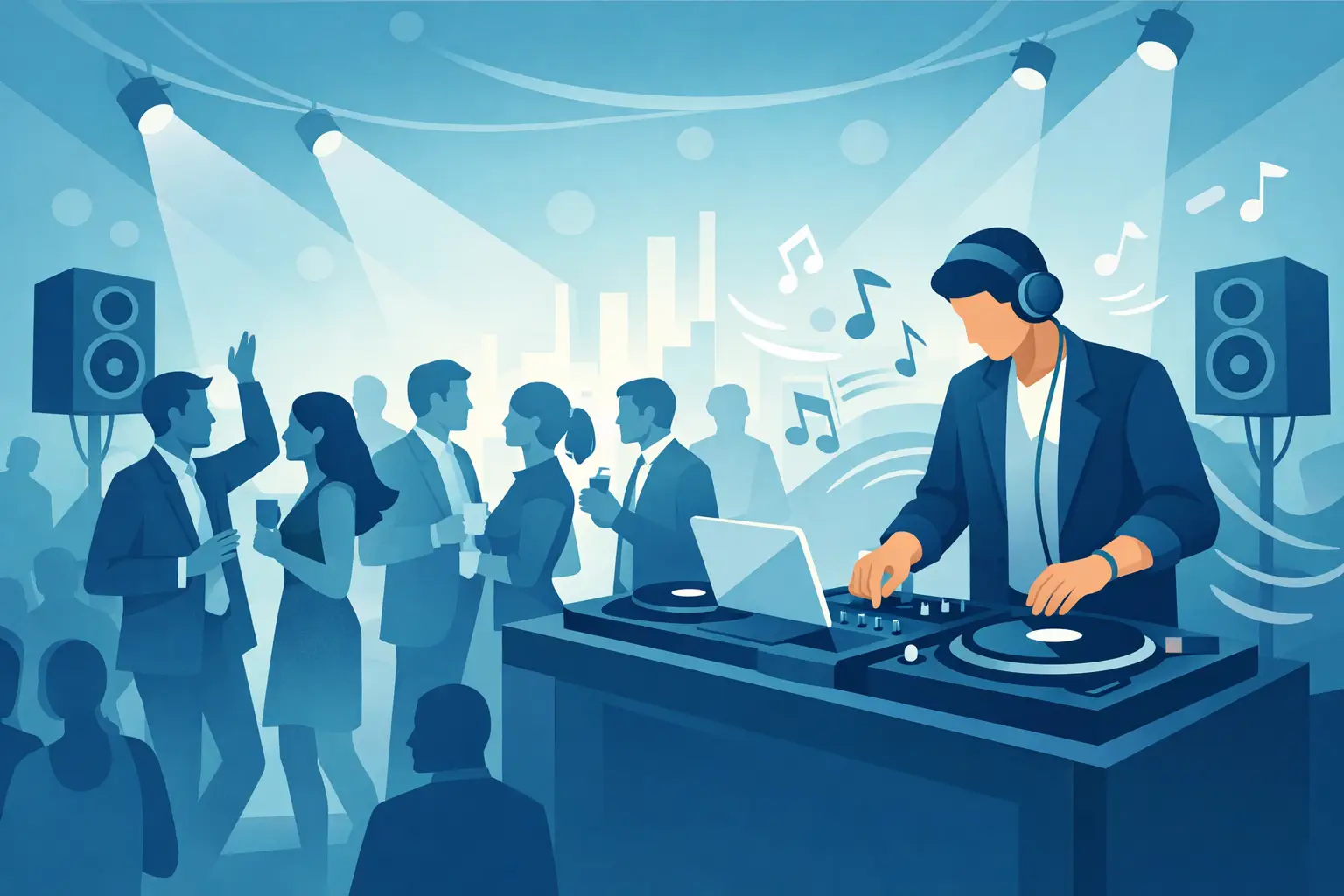
Strong corporate event DJ entertainment creates continuity. It keeps entrances feeling intentional, walk-ups feeling polished, and transitions feeling fast instead of clunky. It gives the room a pulse without hijacking the agenda. When paired with a skilled emcee, it can also cue audience moments, reinforce event messaging, and prevent dead air from turning into distraction.
This is where many buyers make the wrong comparison. They look at DJs as a line item for music, when the better question is whether that entertainment partner can help carry the room. For business events, that difference is substantial.
Why background music is not enough
A playlist can fill space. It cannot read a room, tighten a handoff, recover a lagging segment, or build anticipation before a recognition moment. Corporate events need more than sound. They need timing, judgment, and control.
Think about the moments where event energy usually slips. Guests are entering but not yet connected. A session ends early and the room goes loose. An award presenter needs a stronger intro. A lunch break runs long. A general session needs a reset before the next speaker. These are not entertainment side notes. They are live production moments, and they shape how professional the event feels.
That is why buyers increasingly look for a format that blends DJ services with hosting and participation. The entertainment is not off to the side. It is working inside the event itself.
The real value of interactive corporate event DJ entertainment
Interactivity gets overused as a buzzword, but in corporate settings it has a practical meaning. It means the audience is not left to sit passively through every transition. It means there are structured ways to bring people in, raise the energy, and keep the room connected without derailing the agenda.
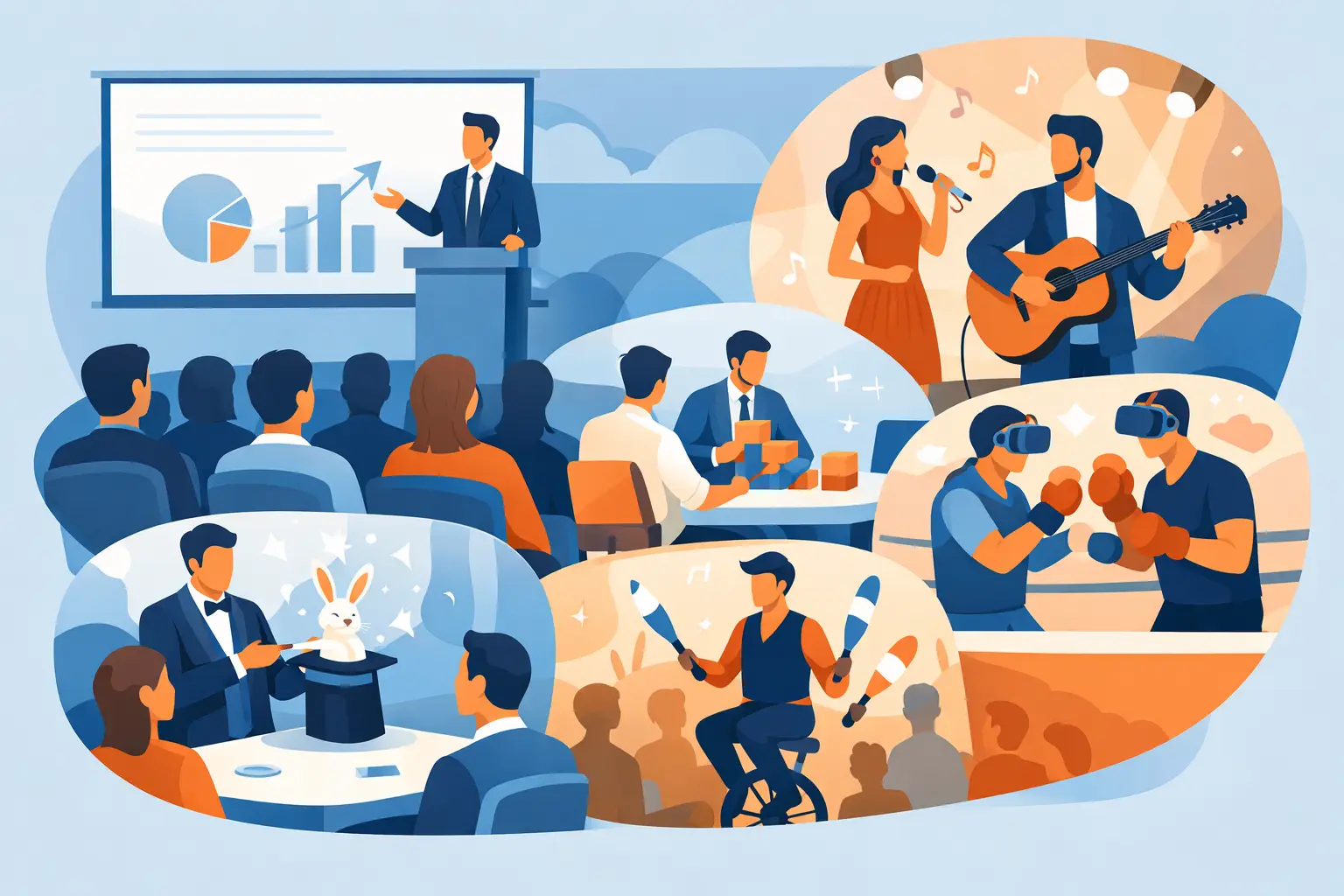
That can take different forms depending on the event. A sales kickoff may need walk-up music, recognition stings, crowd prompts, and a high-energy opener that feels aligned with company culture. A conference may need an emcee-led framework that keeps sessions moving while giving attendees a reason to stay engaged between content blocks. A holiday party may lean more into games, audience moments, and dance-friendly pacing later in the night.
The point is not to force interaction into every minute. The point is to use it where it improves outcomes. Sometimes that means trivia. Sometimes it means hosted audience participation. Sometimes it simply means an emcee and DJ team that knows how to keep the room awake, responsive, and on schedule.
Where planners see the biggest payoff
The biggest win is often not what happens during the most exciting part of the event. It is what does not happen in the in-between moments. No awkward silence while presenters switch. No sagging room after lunch. No uncertain opening where guests are waiting for someone to take control.
For planners, that translates into a cleaner run of show and less pressure on internal teams. HR leaders, executive assistants, and communications teams are often managing ten moving parts at once. They do not need one more vendor who waits to be told what to do. They need a partner who understands cueing, timing, audience psychology, and professionalism in a business environment.
That is why the entertainment format matters. A DJ who can also support live hosting and audience engagement removes friction. Instead of patching together music, facilitation, and filler activities from separate sources, the event gets one coordinated layer built to maintain momentum.
How to evaluate a corporate event DJ entertainment partner
The first question is not musical taste. It is whether they understand corporate flow. Ask how they handle transitions, executive walk-ups, audience warm-up, and timeline changes. If they answer only in terms of playlists and gear, that tells you something.
The second question is about room management. Can they engage a professional audience without becoming corny? Can they read when to elevate the energy and when to stay out of the way? Corporate audiences are mixed by design. You may have senior leadership, sales teams, new hires, partners, and guests all in the same room. Entertainment has to be inclusive, polished, and adaptable.
The third question is how they work with your agenda. Great corporate event DJ entertainment is not separate from programming. It supports the meeting goals. That could mean reinforcing brand moments, managing recognition segments, or creating structured engagement at times when attention would otherwise dip.
Experience in corporate environments matters here. What works at a private party does not always translate to a conference ballroom or general session. Professionalism, pacing, and restraint count just as much as energy.
The trade-offs to consider
Not every event needs the same level of involvement. A networking reception may benefit from lighter hosting and curated music, while a sales rally may need a much more active entertainment presence. More interactivity can create stronger engagement, but only if it matches the culture of the room and the goals of the event.
That is why the best approach is usually customized, not one-size-fits-all. Some organizations want high-energy participation built into the program. Others want a more controlled layer of support that keeps everything moving without pulling focus. Neither approach is inherently better. It depends on audience expectations, leadership style, and the role entertainment is meant to play.
Budget also affects the decision, but cost should be weighed against production value and audience impact. Cheap entertainment often becomes expensive when it creates lulls, confusion, or a weaker attendee experience. A stronger partner can justify the investment by making the event feel more intentional from start to finish.
When this format makes the most sense
Corporate event DJ entertainment delivers the most value when the event has energy gaps to solve. That includes conferences with long agendas, sales kickoffs with recognition moments, company celebrations with mixed audiences, and meetings where transitions need to stay tight.
It is especially effective when internal teams want a turnkey way to keep the room active without relying on staff to become entertainers. Most planners are not looking to manufacture hype. They are looking for a smart, professional way to keep people present, responsive, and connected to the event.
That is also why combined DJ and emcee formats are gaining traction. When one coordinated partner can manage music, pacing, and participation, the room feels more controlled. The audience notices it, even if they cannot name exactly why the event felt better.
For organizations producing events in markets like San Diego, Los Angeles, Palm Springs, and Phoenix, that expectation is only getting higher. Buyers want entertainment that matches the professionalism of the brand while still creating a room people remember.
A smarter standard for corporate events
The old model treated the DJ as an add-on. Play music before dinner, maybe open the dance floor later, and stay out of the way. That still has a place at some events, but it misses what many business gatherings need now. Corporate audiences are harder to hold, schedules are tighter, and expectations are higher.
The smarter standard is entertainment that actively supports engagement. Music sets the tone, yes, but tone alone does not carry an event. Structure does. Hosting does. Audience involvement does. When those pieces work together, the event feels sharper, faster, and more memorable.
That is the opportunity in choosing the right partner. Not louder music. Better momentum. And when the room stays with you from opening moment to final applause, everything else on the agenda has a better chance to land.