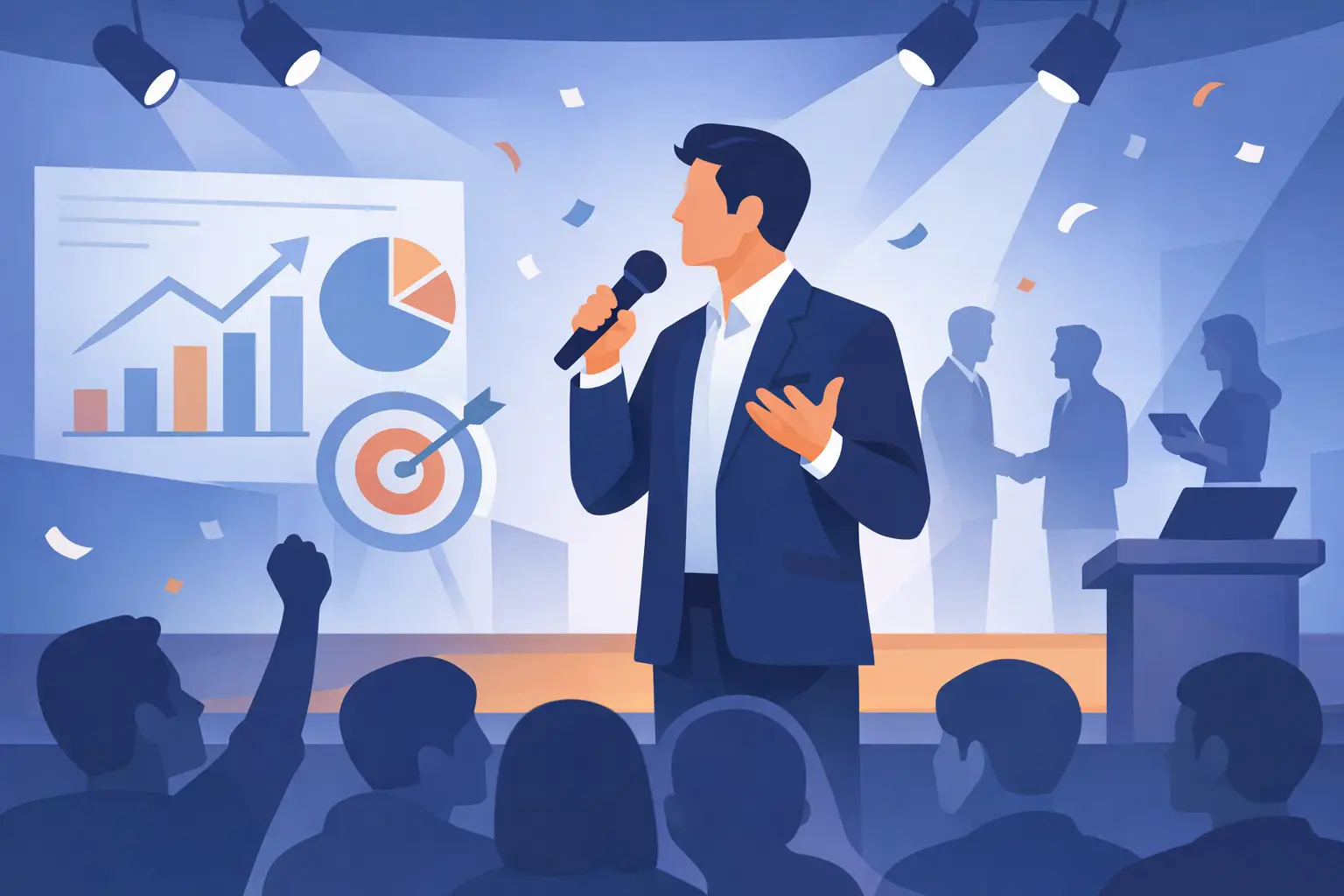
The fastest way to lose a room at a sales kickoff is not bad content. It is bad pacing. A strong sales kickoff emcee keeps the event moving, protects momentum, and makes sure every segment lands the way leadership intended.
That matters more than most teams realize. Sales kickoffs are loaded with pressure. Leadership wants alignment. Marketing wants message retention. Event planners need smooth timing. Attendees want energy, clarity, and a reason to stay engaged after the first keynote. When those goals are not actively managed in the room, even a well-built agenda can feel flat.
Why a sales kickoff emcee matters
A sales kickoff is not just another corporate meeting with better lighting. It is a high-stakes internal event built to reset direction, reinforce priorities, and build confidence for the quarter or year ahead. Every session has a job to do. Every transition either supports that goal or weakens it.
That is where the emcee changes the outcome.
A sales kickoff emcee is not simply the person who says, “Next up.” They are the live connector between content, audience, and energy. They frame speakers properly, keep transitions tight, recover quickly when timing shifts, and prevent the room from drifting. In practical terms, they make the whole event feel more intentional.
For planners, that creates breathing room. For leadership, it protects the message. For attendees, it makes the day feel faster, sharper, and more worth their attention.
What a sales kickoff emcee actually owns
The job starts before anyone walks on stage. A good emcee understands the agenda, speaker order, timing pressure, room dynamics, and audience profile. They know where the high-energy moments belong and where the room may need help re-engaging.
Once the event begins, they set the tone immediately. The opening matters because it tells the audience what kind of experience they are in for. If the kickoff starts stiff, the room often stays stiff. If it starts with clarity, confidence, and controlled energy, people lean in.
From there, the emcee manages the spaces that usually cause trouble. They keep intros concise, avoid awkward dead air, and maintain continuity between sessions that may have very different styles. A finance update and a recognition segment do not carry the same rhythm. Neither should their setup.
They also read the room in real time. If a session runs long, they know how to tighten the reset without making it feel rushed. If the audience is fading after lunch, they can lift the energy without turning the event into a talent show. That balance is the difference between entertaining a crowd and actually supporting business goals.
The biggest risk is not low energy alone
Most teams think they need an emcee because they want the room to feel more exciting. That is true, but it is only part of the picture.
The bigger problem is loss of control.
When no one is actively managing the live experience, small issues stack up. Speakers overrun. Announcements feel disconnected. Audience participation becomes inconsistent. Sessions start feeling longer than they are. By the middle of the day, people are checking email, stepping out, or mentally gone.
A polished emcee prevents that slide. They give structure to the event in ways the audience may not consciously notice, but they absolutely feel. The room stays cleaner. The handoffs feel sharper. The entire kickoff feels more organized, even when there are last-minute changes behind the scenes.
That kind of control is especially valuable for internal teams carrying multiple responsibilities at once. Event planners should not have to troubleshoot production, coordinate speakers, and worry about room energy at the same time.
Emcee only versus interactive event host
This is where it depends on what your kickoff needs.
Some events benefit from a traditional emcee approach. If the agenda is content-heavy and highly executive-led, a polished host who can guide transitions and maintain professionalism may be exactly right.
Other kickoffs need more than stage presence. They need active engagement built into the experience. That can include audience interaction, structured participation, music-driven energy shifts, light facilitation, or game show-style moments that break up passive listening. In those cases, the right host is not just managing flow. They are creating momentum.
For a sales audience, that distinction matters. Sales teams are used to fast pace, recognition, competition, and high interaction. If the kickoff format is too static, attention drops quickly. The room may still look full, but the energy is gone.
An interactive format solves that problem when it is handled professionally. The key is restraint. You want enough audience involvement to keep people invested, not so much that the event loses focus. Strong corporate hosting knows the difference.
What planners should look for in a sales kickoff emcee
Stage confidence is the baseline, not the deciding factor. Plenty of people can speak clearly into a microphone. Fewer can manage a corporate room with authority, pace, and business awareness.
Look for someone who understands timing as well as tone. They should be able to energize the audience without stepping on leadership messaging. They should know how to introduce executives in a way that builds presence, not fluff. They should be comfortable making adjustments live without making the event feel unstable.
It also helps when the emcee understands audience psychology. A room of sales leaders, account executives, and revenue teams responds differently than a general conference crowd. They are typically faster to judge, quicker to disengage, and more responsive to authentic momentum than forced hype. The host needs to read that correctly.
Operationally, professionalism matters just as much. A good emcee comes prepared with names, titles, pronunciations, key talking points, and backup plans. They collaborate well with production and internal stakeholders. They make the planner’s job easier, not harder.
Where the emcee has the biggest impact during the day
The opening is obvious, but it is not the only critical moment. Midday is often where kickoffs lose altitude. After a few presentations and a meal break, audience energy naturally dips. This is where a sales kickoff emcee earns their value.
A smart host can reset the room quickly. Sometimes that means tightening the next intro and raising the pace. Sometimes it means building in a structured interaction that gets people participating again. Sometimes it means using music and timing to reestablish momentum before the next speaker takes over.
Recognition segments are another high-impact moment. Sales teams care about wins, but these segments can drag if they are not handled well. An emcee can make recognition feel elevated and fast-moving instead of repetitive.
The same goes for Q&A, panel transitions, award presentations, and closing moments. These are often the places where events either feel polished or patched together.
Why this role protects the investment in your event
A sales kickoff involves real budget, internal visibility, and executive expectation. The content may be strong. The venue may be right. Production may be sharp. But if the live experience feels uneven, attendees remember that more than the slide design.
That is why the emcee role is not cosmetic. It is performance support for the entire agenda.
The right host helps your content land better because people stay with it. They help leadership appear more credible because the event feels under control. They help planners reduce risk because someone is actively managing the room, not just waiting for the next speaker cue.
For organizations that want more than background music and basic announcements, this is where an interactive entertainment partner can add real value. A brand like Kid Corona is built for that middle ground where engagement, structure, and energy all need to work together in a corporate setting.
The best choice is the one that fits the room
Not every sales kickoff needs the same level of interaction. A national launch meeting has different demands than a regional rally. A one-day ballroom program needs a different hosting style than a multi-day conference with breakouts and evening events.
What does stay consistent is the need for control, momentum, and audience attention. If your team is worried about awkward transitions, dead air, low participation, or an agenda that feels longer than it should, an experienced sales kickoff emcee is not an extra. It is part of making the event work.
The best events feel easy to the audience because someone skilled is doing the hard work in real time. When that role is handled well, the room stays with you, the message carries further, and the kickoff starts delivering before the first session is even over.
If you want your sales kickoff to feel sharper, faster, and more alive, start by looking at who is holding the room together.